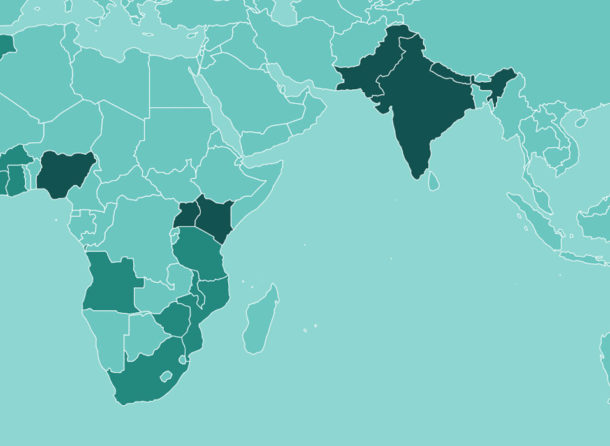
London Climate Action Week 2025: Time to move from planning to implementation
Reall proudly participated in this year’s London Climate Action Week 2025 (LCAW), with Clare Ollerenshaw, our Programme Lead – Climate Advocacy and Green Buildings, representing the organisation on June 25th and 26th. The Climate Innovation Forum 2025 (CIF 2025) and Cities Climate Finance Leadership Alliance (CCFLA) Annual Assembly offered valuable opportunities to engage, collaborate, and learn through sessions focused on turning climate ambition into action. This blog shares key highlights from our time at LCAW, demonstrating the importance of climate action within Reall’s focus to deliver green affordable homes in emerging markets.
Organised by Climate Action, the CIF 2025 was a LCAW flagship event, bringing together leaders from business, policy, investment, and civil society. Serving as a key milestone between COP 29 and 30, the key message from the event was clear: we already have 80% of the necessary technology and approaches to address the climate crisis, now what is now required is to scale them up, requiring bold financial innovation and robust public-private partnerships.
This sentiment was echoed at the SBTi Climate Ambition to Action event, where corporate leaders underscored the urgency of moving beyond pledges to concrete implementation. This focus on translating ambition into action aligns with Reall’s work towards connecting climate ambition with real-world delivery of green, affordable housing in emerging markets.
Preparation for COP 30
Brazil’s Minister for the Environment and Climate Change, Marina Silva, gave a keynote speech at the CIF event, in the run up to Brazil hosting COP30 in November this year. The Minister spoke about the need for COP30 to focus on implementation. She also shared about the opportunity for civil society to inform COP30 through the Global Stocktake process.
The role of private sector finance in tackling climate change
A session on the World Bank’s Private Sector Investment Lab at CIF 2025 was particularly useful for Reall. The Lab has made progress in five priority areas: ensuring regulatory certainty, increasing the use and enhancing the efficiency of World Bank Group guarantees, mitigating foreign exchange risk, expanding originate-to-distribute models for private capital, and increasing the deployment of equity and junior capital. These themes strongly resonate with Reall’s legacy and ongoing work, particularly through the Green Affordable Housing Finance (GAHF), and our use of guarantees (both on the demand and supply sides) to unlock private finance for climate-smart, affordable housing in emerging markets.
At the CCFLA Assembly, a key message emerged: accelerating and equitably directing finance to cities in the Global South is essential to keeping the 1.5°C target within reach. With the Global South needing an estimated $1.3 trillion annually by 2035 to support a just transition, speakers called for bold action and innovative finance, especially for emerging markets where climate vulnerability and inequality intersect. They highlighted that making climate knowledge accessible and empowering key influencers to take action are critical to driving systemic change.
Cities’ role in a net zero future
A standout session at CIF 2025 highlighted the vital role cities play in achieving a net-zero carbon future. Despite being on the frontline of climate impacts, cities receive only 11% of climate finance currently. This issue is particularly acute in regions like Africa, where many lack financial autonomy, making change and fundraising challenging.
Speakers, including Christina Gamboa from the World Green Building Council, Mauricio Rodas, the former Mayor of Quito, and Jose La Loggia from Trane Technologies. They underscored the urgent need to unlock funding for climate-resilient infrastructure, suggesting tools such as the Green Cities Guarantee to facilitate this process.
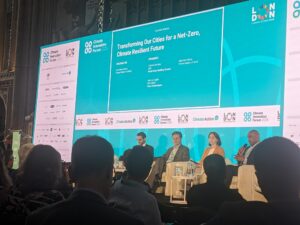
Transforming Cities for a Net-Zero, Climate Resilient Future session at LCAW
Christina Gamboa, CEO of the World Green Building Council, highlighted that climate investment into the built environment is critical as 34% of global emissions are created by building and operating buildings. As the world gets warmer the cooling required will wipe out any savings if efficiencies aren’t made. Christina noted that true partnerships between the public and the private sector are required to achieve this.
In this context, the launch of the World Green Building Council’s NDC Scorecard for Sustainable Buildings was particularly timely. As countries prepare updated climate commitments ahead of COP30, the scorecard serves as a powerful digital tool to identify gaps and strengthen building-related policies within Nationally Determined Contributions (NDCs). It is a call to action for policymakers to collaborate with national Green Building Councils and prioritise bold, actionable solutions that benefit both people and the planet.

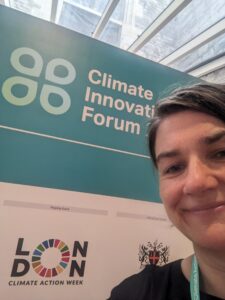
(Left) Clare Ollerenshaw, Programme Lead – Climate Advocacy and Green Buildings with Christina Gamboa, CEO of the World Green Building Council and (Right) Clare at LCAW 2025
At Reall, the key message of LCAW 2025 was, more implementation, faster and at scale strongly resonates us. Reall remains deeply committed to driving forward a climate-positive future. Our work in green, affordable housing continues to demonstrate that low-carbon development is both possible and essential. At Reall, we believe that sustainable housing isn’t just about solving climate issues; it’s also about creating a fairer and more resilient world for everyone.
Written by Jayamali Kankanige, Climate and Green Buildings Coordinator. Edited by Clare Ollerenshaw, Programme Lead – Climate Advocacy and Green Buildings and, Nidhi Mehta, Content and Communications Coordinator
Read more stories
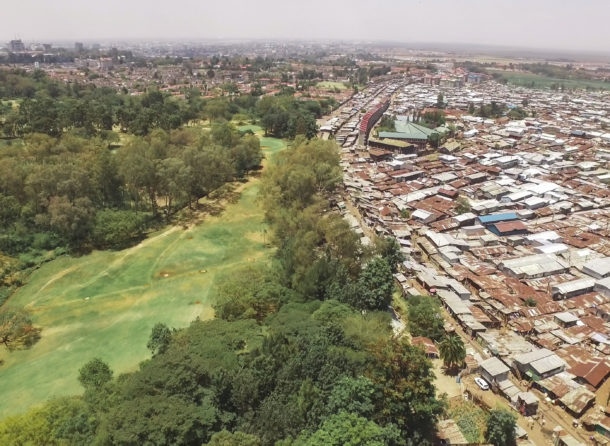
How Affordable Homes could help solve the global climate crisis
The United Nations climate summit, COP25, starts today in the Spanish city of Madrid where climate leaders will push to scale up action and investments into rapidly reducing global greenhouse gas emissions and support broader sustainable development agendas, specifically addressing …
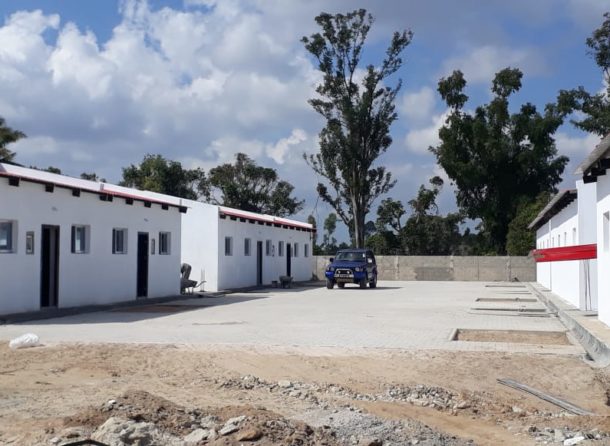
Celebrating affordable housing in Beira
The ribbon-cutting ceremony was attended by Reall’s Director of Investment and Operations Patrick Domingos-Tembwa, Mayor of Beira Daviz Simango and Casa Real Director Marie Odile. The celebration was particularly poignant as these homes managed to withstand the destruction of Cyclone…

New Partnership: Syntellect
Reall are delighted to be partnering with India-based technology firm, Syntellect. Syntellect are committed to giving unbanked people the opportunity to access mortgage finance across Africa and Asia. Syntellenct has created RightProfile, a customer profiling platform designed to help lenders …